Brick and natural stone look solid, but many are surprisingly soft. Handmade and older bricks, sandstone and limestone can lose their fired skin or weathered face to a pressure washer in seconds, and once that is gone the masonry absorbs more water and weathers faster. Lime mortar in older buildings is softer still and can be washed out of the joints.
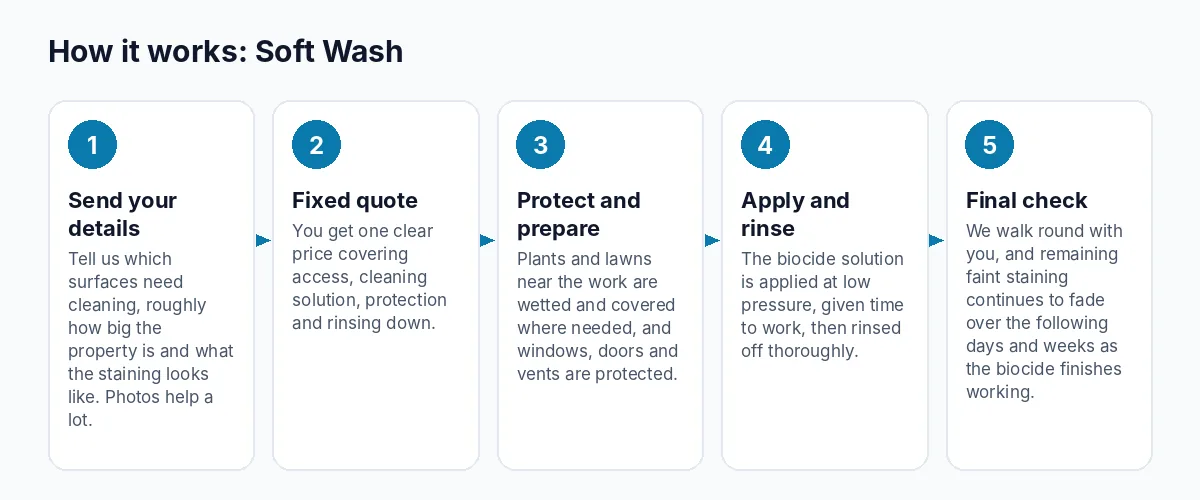
Soft washing avoids that damage by killing organic growth chemically and rinsing at low pressure. It deals well with green algae, black mould and lichen. It does not remove every kind of staining: efflorescence, rust, paint, carbon deposits and mineral staining are not organic, and may need specialist masonry cleaning methods. Listed buildings may need consent before cleaning, so check with your local council if your property is listed.
What is included
- Assessment of the brick or stone type, condition and pointing
- Identification of organic and non-organic staining
- Pre-wetting of the masonry and protection of nearby plants
- Low-pressure application of a biocide suited to the material
- Gentle rinsing that does not erode the face or the joints
- Treatment of garden walls, plinths and steps in the same material
- Advice on any staining that needs a different method
Who it is for
- Brick houses with green algae on shaded elevations
- Sandstone and limestone with black or green organic staining
- Older properties with soft bricks or lime mortar
- Garden walls, steps and boundary walls in brick or stone
- Owners who want to avoid the damage high pressure can cause
How much does it cost?
As a guide, brick and stone soft washing typically costs £4 to £8 per m². A full house elevation usually falls between £300 and £1,100 depending on size, height and how sensitive the masonry is. See our full cost guide.